Home › Blog › Compliance training
PAT Test Training: Who Needs It, What the Law Says and How to Get Qualified
PAT test training is how a business makes sure the person checking its portable electrical equipment is competent to do it, which is what the law actually asks for. There is no legal requirement to use an electrician, to test every year or to stick labels on plugs. What the Electricity at Work Regulations 1989 require is that equipment which could cause injury is kept safe, and the Health and Safety Executive (HSE) says the person doing the work must be competent. This page explains who needs which level of training, what the City & Guilds 2377 qualification involves and costs, and how to run PAT as part of a sensible safety policy rather than a box-ticking exercise.
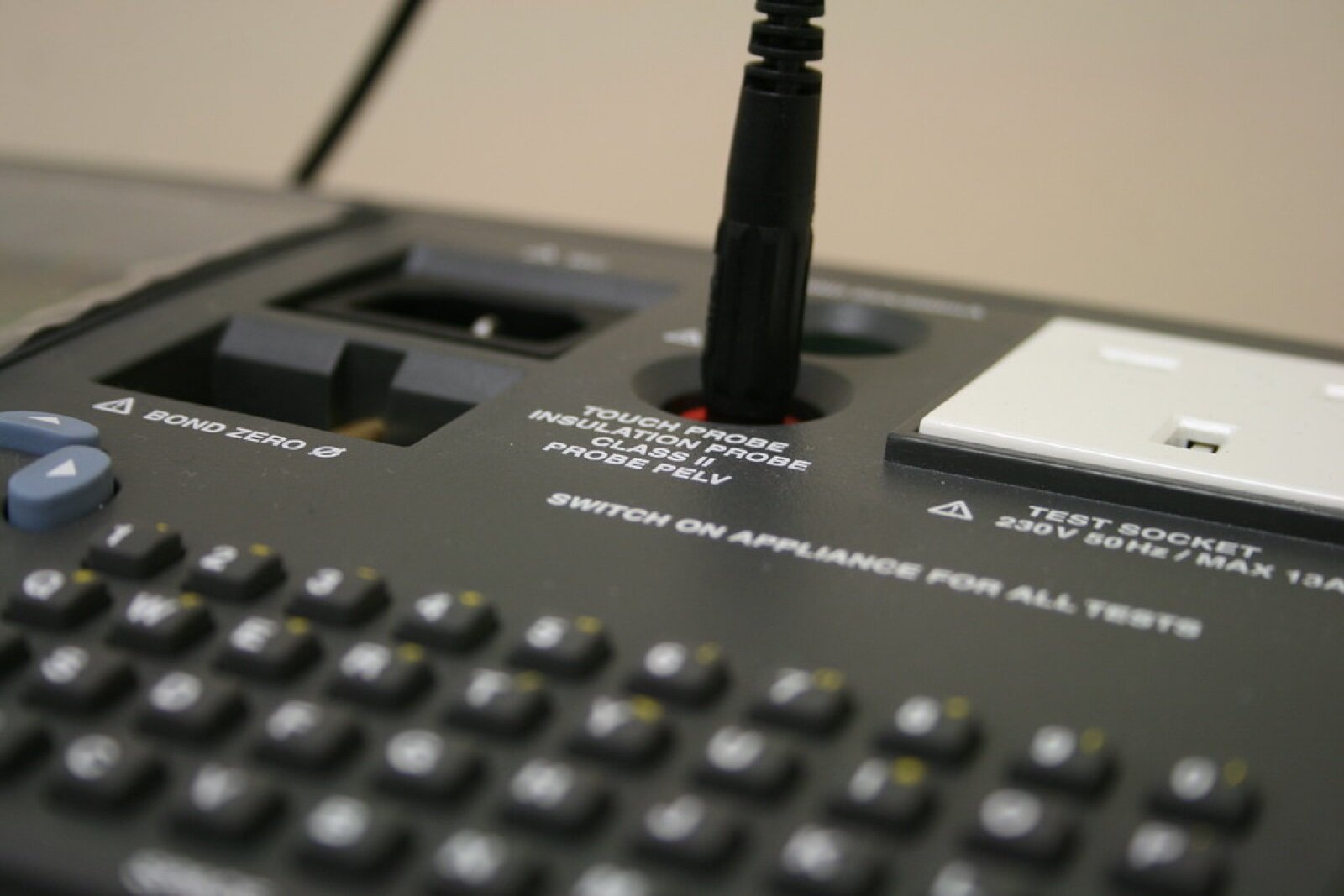
The law: the Electricity at Work Regulations 1989 require safe equipment, but do not say how often to test or who must do it.
Who can test: a competent person. In low-risk workplaces, HSE says a trained member of staff can do visual inspections.
The main qualification: City & Guilds Level 3 Award in the In-Service Inspection and Testing of Electrical Equipment (2377-77).
Typical course: two days; one provider lists it from £310 plus VAT, including registration and the exam.
The reference book: the IET Code of Practice for In-service Inspection and Testing of Electrical Equipment, fifth edition.
What the law requires, and what it does not
Portable appliance testing, usually shortened to PAT, is the examination of electrical equipment to check it is safe to use. The legal duty behind it comes from the Electricity at Work Regulations 1989, which require any electrical equipment with the potential to cause injury to be maintained in a safe condition. HSE is clear in its PAT guidance that the Regulations do not specify what needs to be done, by whom or how often. They do not make testing a legal requirement in itself, and they do not require it to be done every year.
HSE also says there is no legal requirement to label equipment or keep records, though it describes both as useful ways to show a maintenance scheme exists and to monitor whether it works. New equipment should arrive safe and does not need a formal test, only a quick visual check for damage. The exception HSE singles out is hire equipment, which it strongly recommends is formally inspected and tested before each hire.
This matters for training because it means the right level of training depends on your risk, not on a fixed rule. A small office with a few computers and a kettle needs a very different approach from a construction firm whose power tools are dragged around a muddy site every day. HSE's own example is that a power tool used on a building site should be examined more often than a lamp in a hotel bedroom.
The three levels of checking, and the training each needs
| Level | What it involves | Training needed |
|---|---|---|
| User checks | The person using the equipment looks for damaged plugs, cables and casings, scorch marks and loose parts before use. | A short briefing, ideally with a simple checklist. HSE describes this as based on simple training. |
| Formal visual inspection | A more thorough, recorded inspection by a nominated person, which can include opening the plug to check the fuse and cable grip. | Enough knowledge and training to spot defects. HSE says a sensible member of staff can do this in many low-risk workplaces. |
| Combined inspection and testing | Visual inspection plus electrical tests with a PAT tester, such as earth continuity and insulation resistance. | A greater level of knowledge: the right test equipment, the ability to use it properly and to understand the results. |
HSE stresses that visual examination is essential, because most defects can be found by looking and some cannot be found by testing at all. A machine reading of "pass" on a plug with a split cable is not a safe appliance.
Who needs PAT test training?
- Every employee who uses electrical equipment needs to know how to do a user check and what to do with something that fails: stop using it, label it and report it.
- Facilities, maintenance and office managers who will carry out formal visual inspections in-house need a short course on what to look for and how to record it.
- Anyone who will do combined inspection and testing, whether as an in-house role or as a business offering PAT services, needs formal training on the test equipment and the IET Code of Practice. The best-known qualification for this is the City & Guilds 2377 award.
- Electricians often add the 2377 award to offer PAT alongside installation work.
The City & Guilds 2377 PAT testing course
The recognised qualification is the City & Guilds Level 3 Award in the In-Service Inspection and Testing of Electrical Equipment, known by its number, 2377-77. It is built around the fifth edition of the IET Code of Practice for In-service Inspection and Testing of Electrical Equipment, which training providers expect candidates to have a copy of. Some include the book in the price and others ask you to buy it separately, so check before booking.
Course formats vary by provider, but the pattern is similar:
- Length: usually two days in a classroom with practical work on a range of appliances.
- Content: the Electricity at Work Regulations, the Code of Practice, classes of equipment, safe working, the tests themselves, how often to test and how to record results.
- Assessment: an open-book online multiple-choice exam on the Code of Practice; some providers add a practical assessment.
- Cost: Logic4training, for example, lists it from £310 plus VAT across four centres, with City & Guilds registration and the exam included. Prices vary by provider and location.
- Entry requirements: there are usually no formal ones, but the course is pitched at people with some electrical knowledge, and some providers say it is aimed at electricians or maintenance staff.
If nobody in your business has an electrical background, a short non-accredited course on visual inspection, combined with a contractor who holds the 2377 award for the testing, is often a better fit than sending staff on a Level 3 qualification.
Online PAT training
Online courses are a sensible way to train staff in user checks and formal visual inspection, and many cover the legal background well. They cannot teach someone to use a PAT tester properly, because that needs hands-on practice with real equipment and faults. For combined inspection and testing, look for a course with a practical element, or pair online theory with supervised practice.
Building PAT into your safety policy
- List your equipment and where it is used. Group items by risk: equipment that is moved around, used outdoors or in harsh conditions is higher risk than fixed office IT.
- Decide intervals by risk, not by habit. HSE publishes suggested intervals for different types of equipment and workplace in its guidance on maintaining portable electrical equipment.
- Nominate and train the right people for each level of checking, and keep their training records.
- Record what you do. It is not a legal requirement, but a simple register shows your scheme exists and lets you spot repeat failures.
- Review it. If inspections keep finding the same faults, check more often; if they never find anything, you may be checking too often.
PAT sits within a wider health and safety and compliance framework. Our pages on building a compliance programme and display screen equipment training cover the related duties, and what corporate compliance means sets out how training fits the bigger picture.
Sources: HSE, PAT (portable appliance testing) FAQs; Logic4training, City & Guilds 2377 PAT testing course. Checked 6 November 2026.
Frequently Asked Questions
Do you need to be an electrician to do PAT testing?
No. HSE says the person must be competent. In many low-risk workplaces a trained member of staff can do visual inspections, but combined inspection and testing needs the right equipment and the knowledge to use it and read the results.
Is PAT testing a legal requirement every year?
No. The Electricity at Work Regulations 1989 require equipment to be kept safe but do not say how often to test. HSE says the frequency should depend on the type of equipment and where it is used.
What is the City & Guilds 2377 qualification?
It is the Level 3 Award in the In-Service Inspection and Testing of Electrical Equipment (2377-77), based on the IET Code of Practice. Courses usually last two days and end with an open-book multiple-choice exam.
How much does PAT testing training cost?
It depends on the provider. Logic4training, for example, lists the two-day City & Guilds 2377 course from £310 plus VAT, including registration and the exam. Short in-house or online courses for visual checks cost less.
Can you do PAT test training online?
You can learn the theory and user checks online, but using a PAT tester properly needs hands-on practice, so look for a course with a practical element for combined inspection and testing.
Do appliances need a PAT sticker?
No. HSE says there is no legal requirement to label equipment or keep records, though both are useful for showing that a maintenance scheme exists and works.